Why Wellbeing Is the Foundation for Performance: Coaching for High-Achieving Women
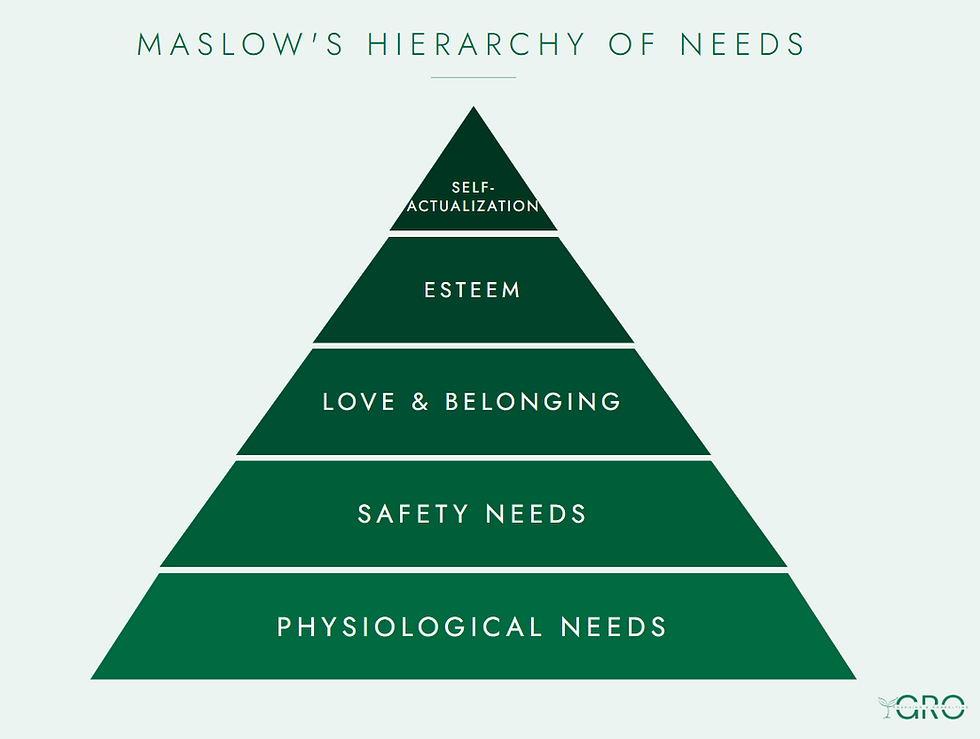
You know the pyramid.
Maslow's hierarchy of needs, the one with physiological needs at the bottom and self-actualisation at the top, is one of those frameworks so familiar it's almost stopped meaning anything.
But if you're a high-achieving woman who's spent years giving more than she has, doing more than she should, and somehow still ending up feeling like she's falling short, it's worth looking at that pyramid again.
Because here's the thing: you can't build a fulfilling, purposeful, self-actualised life on top of foundations that were never solid in the first place. And those I work with through my wellbeing coaching for women, have been trying to do exactly that.
The bit everyone skips
At the bottom of Maslow's pyramid sit the basics: sleep, food, safety, rest, a nervous system that isn't permanently switched to "on." These aren't the interesting bits. Nobody puts "I finally got eight hours of sleep" on their vision board next to "start the business" or "get the promotion."
But that's exactly the problem. We treat the foundational layers as optional, something to sort out later, once the bigger goals are handled. High-achieving, empathetic women in particular are brilliant at pushing straight past their own basic needs in service of everyone else's. You'll make sure your team is supported, your family is fed, your clients are happy, your friends feel heard, and somewhere in that list your own rest, nourishment and safety slip off the bottom without anyone noticing, least of all you.
The result isn't sustainable ambition. It's a slow leak and eventually, the spark goes.
Wellbeing isn't a wellness extra, it's structural
This is where I think the wellness industry has done us a disservice. Wellbeing gets sold as a bolt-on, a bubble bath, a spa day, a five-minute breathing app between meetings. Nice, but not necessary, even something to reach for once the real work is done.
In Maslow's model, those foundational needs aren't there to be admired and then left behind, they're there because everything above them depends on them holding steady. You cannot build genuine self-fulfilment, meaningful progression, or a life that feels like yours on top of a foundation of chronic exhaustion and constant overgiving.
Yes, wellbeing shows up right through the pyramid, in belonging, in esteem, in self-actualisation too. But the base layer is where it starts, and it's the layer that gets ignored first when life gets busy. That's precisely why it needs naming, and addressing, before anything else.
What overgiving actually costs you
For a lot of the women I coach, the pattern looks like this: capability breeds responsibility, responsibility breeds overgiving, and overgiving becomes identity. You're the one who copes. The one who holds it together. The one everyone else leans on.
It feels good, for a while. Being needed is validating. But when your sense of worth becomes tied to how much you can carry for other people, your own foundational needs get treated as indulgent rather than essential. Rest starts to feel like something you have to earn. Saying no starts to feel like letting people down.
And slowly, without any single dramatic moment, the spark that used to make you good at what you do starts to dim.
Rebuilding from the bottom up
The work isn't about doing less, exactly. It's about removing the blockers that stop you from protecting what should never have been negotiable in the first place. That might mean delegating properly instead of picking things straight back up when no one's looking. It might mean asking for help and recognising that as maintenance, not failure. It might simply mean noticing where you've let your own basic needs slide to the bottom of everyone else's list.
Because here's what I want you to take from this: strong foundations aren't the boring bit before the real work starts. They are the real work. Everything you're capable of, the impact you want to have, the version of yourself you're trying to grow into, all of it depends on what's underneath it.
If you've lost your spark, it's rarely because you're not driven enough, not capable enough, not doing enough. It's usually because the basics got skipped for so long that there was nothing left to build on.
Start there. Build up properly.
The rest becomes so much more possible when the foundation can actually hold it.


Comments